
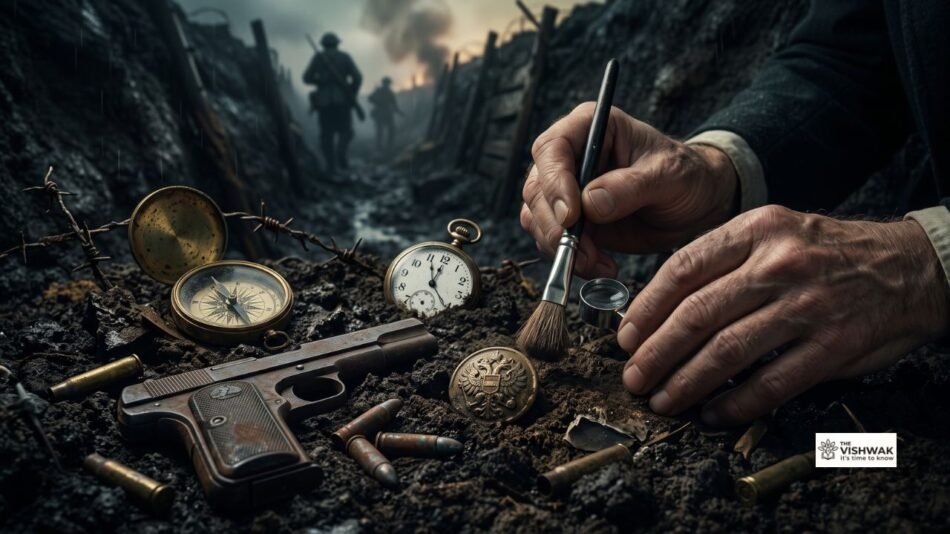
I have always been fascinated by how fragile peace really is. When we look back at the major turning points in human history, few events feel as terrifyingly preventable—yet tragedy-driven and inevitable—as the outbreak of the World War 1.
On a sunny June morning in 1914, a nineteen-year-old nationalist stepped up to an open-top car in Sarajevo. With two pulls of a trigger, he assassinated Archduke Franz Ferdinand of Austria. That single, isolated act of political violence set off a catastrophic chain reaction. Within weeks, the major global powers were pulled into a conflict of an entirely new scale. It was a war that would ultimately claim over twenty million lives, dismantle ancient empires, and rewrite the map of our world forever.
How did a localized assassination in the Balkans spiral out of control so fast? To truly understand the Great War, we have to look past the single spark and examine the highly volatile environment that had been building across Europe for decades.
The Powder Keg: The Four M.A.I.N. Causes of the War
Whenever I try to break down complex historical events, I find it helps to look at the structural framework. Historians generally agree that Europe in 1914 was held together by a fragile web of tension. We can easily map this out using the classic acronym M.A.I.N.: Militarism, Alliances, Imperialism, and Nationalism.
1. Militarism: An Industrial Arms Race
In the decades leading up to 1914, European powers were locked in a massive arms race. Total defense spending by Germany, Austria-Hungary, Great Britain, Russia, Italy, and France increased by roughly 50% between 1908 and 1913 alone. The most intense friction was the naval rivalry between Great Britain and Imperial Germany. Britain’s traditional security rested entirely on its global naval dominance. When Germany began rapidly building a massive battle fleet, it created profound paranoia in London. Europe wasn’t just ready for a war; it was actively armed for one.
2. Alliances: The Secret Geopolitical Tripwires
The European continent was divided into two massive, competing alliance blocks:
-
The Triple Entente: Great Britain, France, and the Russian Empire.
-
The Triple Alliance: Germany, Austria-Hungary, and Italy (though Italy later changed sides).
These treaties were meant to act as deterrents—mutual defense pacts designed to preserve peace by making the cost of war too high. Instead, they functioned like a row of upright dominos. If any single nation got dragged into a conflict, their treaty obligations legally bound their allies to jump into the fight with them.
3. Imperialism: The Global Scramble for Resources
The late 19th and early 20th centuries saw European empires racing to conquer territories across Africa and Asia. This intense competition created constant friction. While countries like Britain and France held massive global portfolios, newer nations like unified Germany felt short-changed. This scramble for colonial markets and raw resources created a toxic undercurrent of permanent distrust.
4. Nationalism: The Internal Fracturing of Empires
While large empires looked stable on a map, they were boiling with internal tension. The Austro-Hungarian Empire was a sprawling, multi-ethnic patchwork holding together millions of Slavs, Czechs, Slovaks, and others who deeply desired independence. In the Balkan region, radical nationalism was peaking. Serbia, backed quietly by its large Slavic ally Russia, wanted to unite all South Slavs under its own flag—directly threatening Austria’s territory.
The July Crisis: A Case Study in Diplomatic Failure
When Archduke Franz Ferdinand was assassinated on June 28, 1914, it triggered a month-long diplomatic chess match known to history as the July Crisis.
Austria-Hungary blamed the Serbian government for providing weapons to the assassin. Backed by a famous “blank check” of unconditional support from Germany, Austria issued an intentionally brutal ultimatum to Serbia on July 23. Even though Serbia accepted almost all the harsh terms, Austria-Hungary declared war on July 28, 1914.
From there, the mechanical nature of military planning took over. Russia mobilized its massive army to protect Serbia. Germany, seeing Russian troops moving toward its borders, activated the Schlieffen Plan—a pre-calculated military strategy to quickly crush France by invading through neutral Belgium before turning around to face Russia.
When German boots crossed the Belgian border, Great Britain honored its own treaty promises to protect Belgian neutrality. On August 4, 1914, Britain declared war on Germany. The trap had snapped shut. The long European peace was dead.
The Reality of Industrialized Warfare
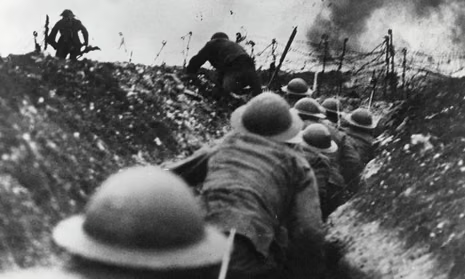
What makes World War I unique—and deeply tragic—is that it represents the exact moment where 19th-century military tactics collided head-on with 20th-century industrial technology.
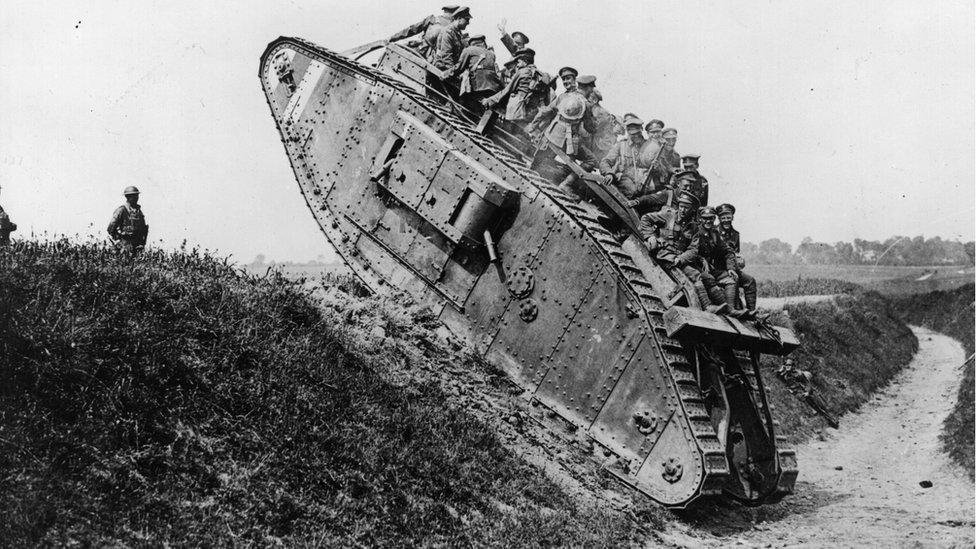
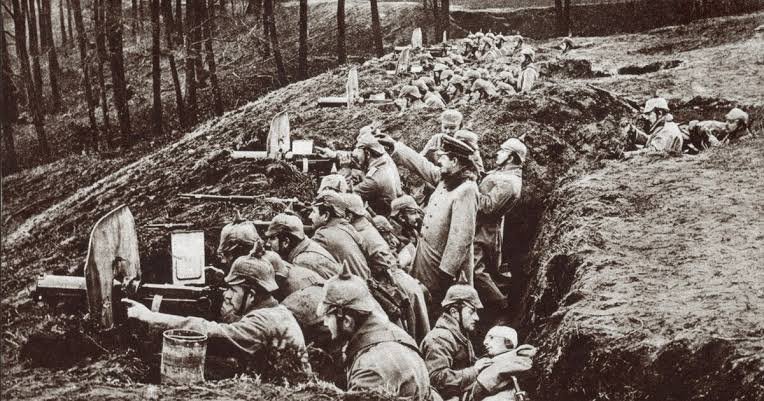
Generals entered the war dreaming of sweeping cavalry charges and swift, decisive battle maneuvers. Instead, they faced defensive weapons of terrifying efficiency: rapid-fire machine guns, heavy artillery that could fire shells from miles away, poison gas, and barbed wire.
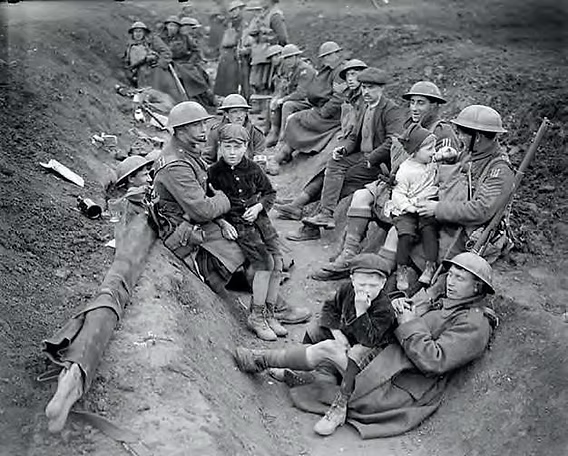
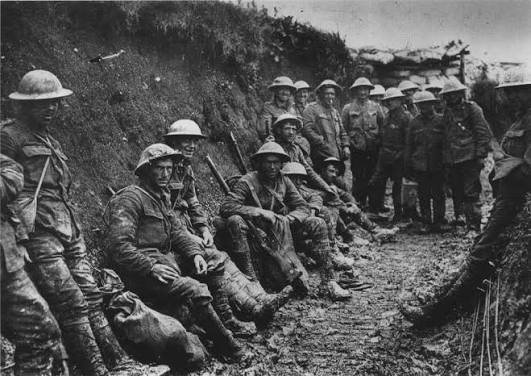
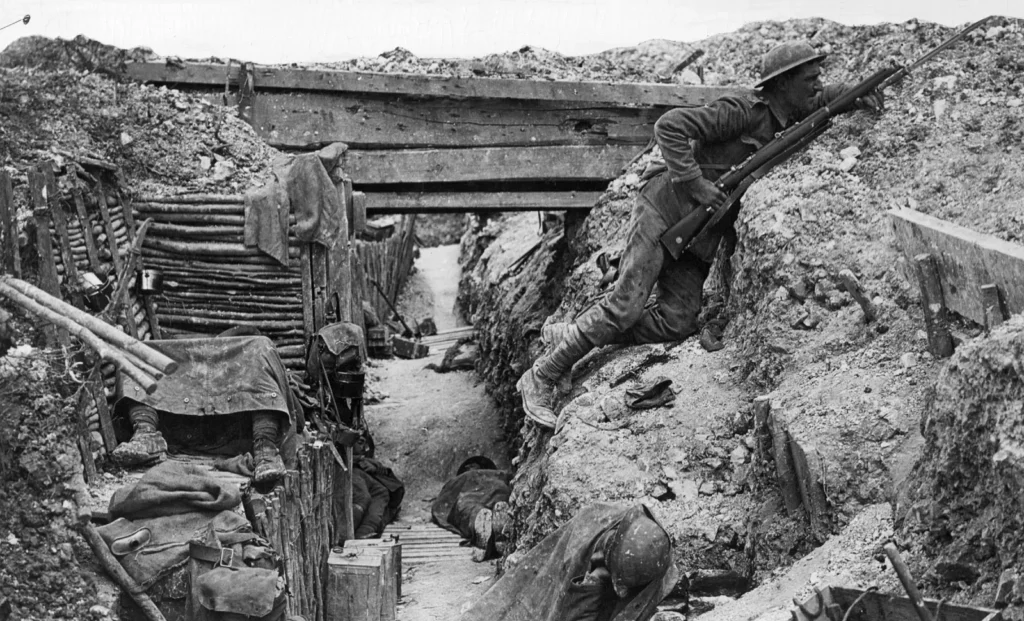
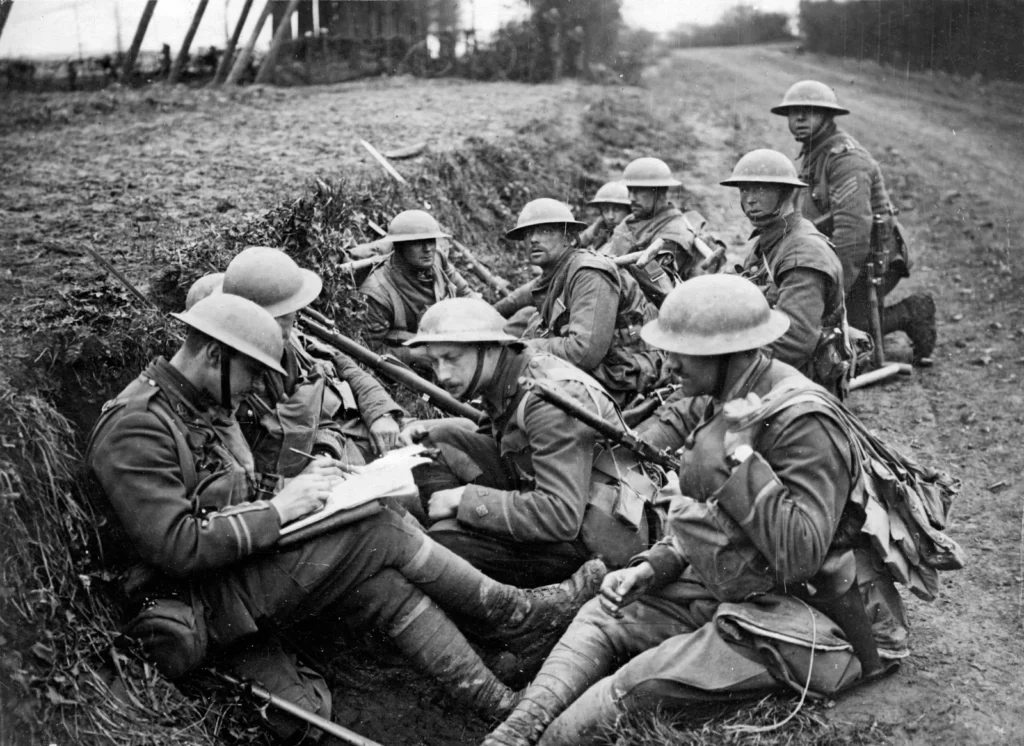
To survive this lethal fire, armies on both sides dug deep into the earth. The result was the infamous Western Front: a vast, unbroken network of muddy, rat-infested trenches stretching over 400 miles from the Swiss border to the North Sea.
For nearly four long years, millions of men lived, fought, and died in these ditches. The space between the opposing trenches—known as “No Man’s Land”—became a scarred wasteland of mud, shell craters, and tangled wire. Battles like Verdun and the Somme dragged on for months, costing hundreds of thousands of lives to move the front line by just a few miles.
A Truly Global Conflict
While the Western Front occupies a massive space in our collective memory, the war stretched far beyond the borders of Europe:
-
The Eastern Front: A fluid, fast-moving war across vast expanses of Russia and Eastern Europe, leading directly to the collapse of the Russian Tsarist regime in 1917.
-
The Middle East: Ottoman forces fought British, Australian, and Indian troops across the deserts of Mesopotamia and Gallipoli, fundamentally redrawing the borders of modern Arab states.
-
The High Seas: German submarines (U-boats) waged unrestricted warfare against merchant shipping, a critical factor that eventually brought the United States into the war in April 1917.
The Aftermath: A Altered Geopolitical Landscape
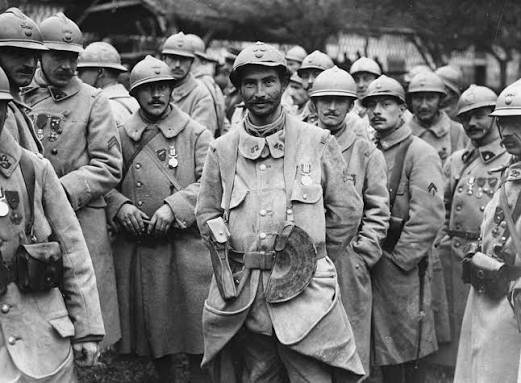
The guns finally fell silent at 11:00 AM on November 11, 1918. The human toll was staggering: roughly 9.7 million military personnel and about 10 million civilians lost their lives.
The political fallout changed the face of the planet. Four massive, centuries-old empires completely collapsed:
-
The German Empire was replaced by the volatile Weimar Republic.
-
The Russian Empire collapsed into a violent revolution, giving birth to the Soviet Union.
-
The Austro-Hungarian Empire was completely broken up into new nations like Austria, Hungary, and Czechoslovakia.
-
The Ottoman Empire dissolved, laying the groundwork for the modern Republic of Turkey and the contemporary Middle East.
The Treaty of Versailles, signed in 1919, officially ended the war but sowed the seeds for future conflict. It forced Germany to accept sole blame for the war, stripped it of its colonies, and imposed crippling economic reparations.
Humiliated and economically broken, Weimar Germany became fertile ground for the rise of radical right-wing nationalism, directly paving the way for the rise of Adolf Hitler and the outbreak of World War II just twenty years later.
Key Takeaways
-
Complex Interconnectivity: The war was not caused by a single event. It was the result of a dangerous build-up of militarism, webbed alliances, imperial rivalries, and radical nationalism.
-
The Failure of Deterrence: Complex defensive alliances meant to guarantee peace actually ensured that a local conflict quickly became a global catastrophe.
-
Technological Shift: The war marked the debut of fully industrialized warfare, where defensive technology far outperformed offensive tactics, leading to horrific casualties.
-
Global Redesign: The maps of Europe and the Middle East were completely redrawn, destroying four empires and shifting the global balance of power toward the United States.
Final Thoughts
When I read about the final weeks of July 1914, I am struck by how many leaders wanted to stop the train before it crashed, only to find they had built a machine they could no longer control. World War I serves as a stark historical warning about the dangers of unchecked nationalism, out-of-control arms races, and political echo chambers. It shows us how quickly small miscalculations can snow-ball into global disasters. It is a chapter of history we must continue to study, not just to remember those who died, but to protect the fragile peace we enjoy today.
5 Frequently Asked Questions (FAQs)
1. Why was World War I called the “Great War”?
Before the outbreak of World War II in 1939, it was referred to as the “Great War” or “The War to End All Wars” simply because humanity had never experienced a conflict of that global scale, industrial capability, and tragic loss of life before.
2. What finally brought the United States into the war?
The U.S. maintained strict neutrality until 1917. Two major events shifted public opinion: Germany’s return to unrestricted submarine warfare, which sank American merchant ships, and the intercept of the Zimmermann Telegram, an internal German proposal encouraging Mexico to attack the United States.
3. How did trench warfare lead to a stalemate?
Defensive military technologies like machine guns, heavy artillery, and barbed wire were highly advanced, while mobility options (tanks were in their infancy and trucks were unreliable) were primitive. Armies could easily defend a position but faced catastrophic losses when attempting to charge forward across open ground.
4. What role did the Spanish Flu play at the end of the war?
The 1918 Influenza Pandemic spread incredibly fast due to the crowded movement of millions of soldiers worldwide. The virus actually killed more people globally than the war itself, severely draining the troop strength of all fighting nations during the final months of conflict.
5. How did World War I lead directly to World War II?
The Treaty of Versailles imposed harsh financial penalties, took away territory, and forced a “War Guilt” clause on Germany. This created deep-seated bitterness, economic chaos, and political instability within Germany, which radical groups exploited to seize power.
World War 1, World War I History, Causes of WWI, July Crisis 1914, World War 1, Trench Warfare, Treaty of Versailles, World War 1, First World War history, What caused World War I, Assassination of Archduke Franz Ferdinand, M.A.I.N. causes of WWI, Western Front trench warfare, World War 1, Triple Entente vs Triple Alliance, World War 1, July Crisis 1914 summary, World War 1, Industrialized warfare technology, World War 1, Collapse of Ottoman Empire, Geopolitical legacy of Great War, World War 1


